
Learning to write numbers is a key skill for preschool and kindergarten children. Our number tracing worksheets and activities provide an engaging way for kids to practice number writing while building fine motor skills. Download printable pages to build number writing skills with confidence.
With our free printable tracing numbers, children can learn to trace numbers 1 to 10, gaining confidence in early math skills. All worksheets are easy to print and ready for use at home or in the classroom.
Use the table of contents below to find what you are looking for and jump straight to it on this page, or scroll down to explore the whole article.
Free Number Tracing Worksheets PDF Downloads
Our printable PDF collection includes worksheets for different ages and ability levels. Simply download, print, and start learning.
Number Tracing Worksheets 1 to 10 for Beginners
These pages feature large dotted numbers and, plenty of tracing space to keep young learners engaged.
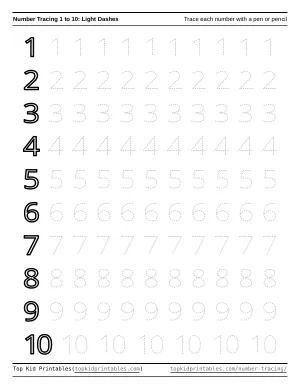
Select either the dark dashed numbers worksheet, or the worksheet with light dashed lines below. Both contain the numbers 1 to 10, in the same format as the images show.
- Printable worksheets are in PDF format.
- Color in the first outlined number (optional).
- Trace over the numbers that follow.
1 to 10 with Large Dark Numbers

1 to 10 with Large Light Numbers
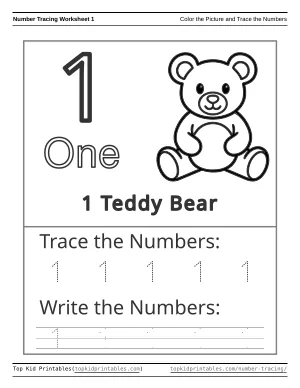
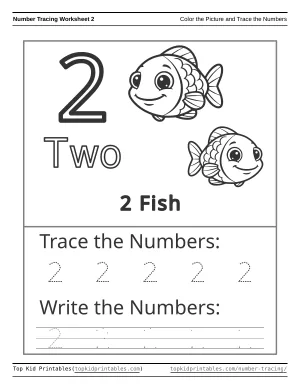
Fun Number Tracing Worksheet 1 and 2 PDF
Dashed numbers 1 and 2 with fun coloring and counting activities.
1 Trace the Number One
2 Trace the Number Two
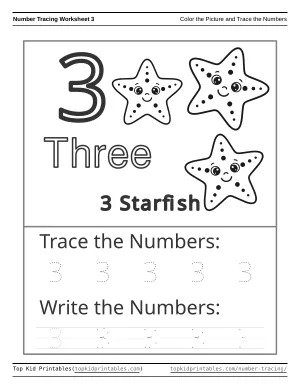
Fun Number Tracing Worksheet 3 and 4 PDF
Dashed numbers 3 and 4 with fun coloring and counting activities.
3 Trace the Number Three
4 Trace the Number Four
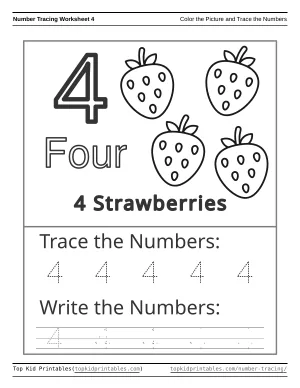
Fun Number Tracing Worksheet 5 and 6 PDF
Dashed numbers 5 and 6 with fun coloring and counting activities.
5 Trace the Number Five
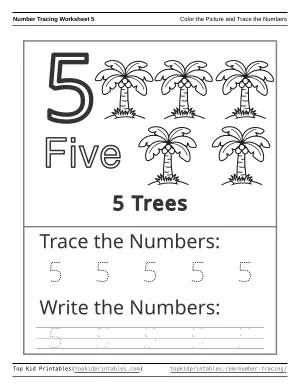
6 Trace the Number Six
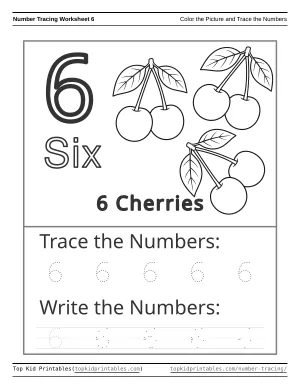
Fun Number Tracing Worksheet 7 and 8 PDF
Dashed numbers 7 and 8 with fun coloring and counting activities.
7 Trace the Number Seven
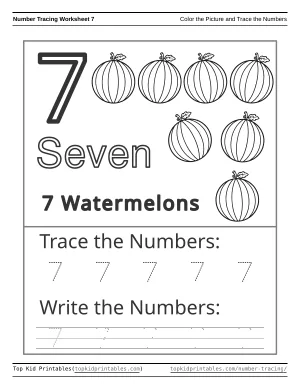
8 Trace the Number Eight
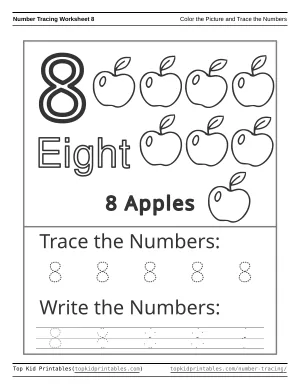
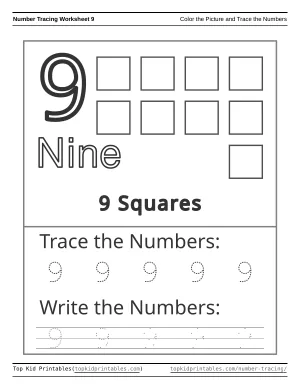
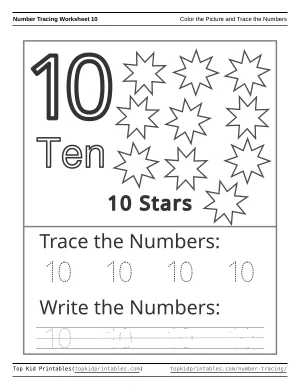
Fun Number Tracing Worksheet 9 and 10 PDF
Dashed numbers 9 and 10 with fun coloring and counting activities.
9 Trace the Number Nine
10 Trace the Number Ten
What is Number Tracing?
Number tracing is an early learning activity that teaches children how to recognize and correctly write numbers by following dotted outlines. Before children can write numbers independently, tracing helps them develop pencil control, hand strength, and proper number formation.
Regular practice offers several benefits:
- Builds fine motor skills
- Improves pencil grip and control
- Develops number recognition
- Encourages correct number formation
- Prepares children for independent writing
- Supports early math readiness
With consistent practice, children become more comfortable writing numbers without guides.
What Are Number Tracing Worksheets?
Number tracing worksheets are specially designed pages that allow children to practice writing numbers by following dotted lines or guided patterns. Each number tracing sheet typically includes:
- Dotted numbers for children to trace
- A space for independent writing
- Fun illustrations related to each number to make learning engaging
These worksheets are perfect for kids learning tracing numbers 1 to 10, providing both structure and practice in a fun, stress-free way.
How to Use Number Tracing Worksheets Effectively
Children learn best through short, consistent practice sessions. Rather than completing many pages in one sitting, focus on one or two worksheets each day.
A simple learning routine could look like this:
| Activity | Time |
|---|---|
| Count objects together | 3 minutes |
| Practice number recognition | 2 minutes |
| Complete one tracing worksheet | 5 minutes |
| Write the number independently | 3 minutes |
| Color or decorate the page | 5 minutes |
This routine keeps learning enjoyable while avoiding frustration.
Fun Activities to Pair with Number Tracing
Worksheets become even more effective when combined with hands-on learning.
Try these simple activities:
- Count building blocks before tracing the matching number.
- Form numbers using play dough.
- Write numbers in sand or shaving cream.
- Count toys around the room.
- Match numbers to groups of objects.
- Use stickers to represent each number.
- Practice counting during snack time.
These activities reinforce the same concepts in different ways.
Why Number Tracing is Important for Early Learners
Learning to write numbers is about much more than handwriting. Every tracing activity strengthens the small muscles in children’s hands while reinforcing number recognition and counting skills.
As children practice, they also learn:
- Visual discrimination
- Left-to-right writing habits
- Concentration
- Hand-eye coordination
- Confidence through repetition
These foundational skills make future math lessons much easier.
Benefits of Number Tracing for Kids
- Improves fine motor skills and pencil control
- Reinforces number recognition
- Prepares children for addition and subtraction concepts
- Encourages independent writing practice
- Makes learning numbers fun and interactive
By using trace a number free worksheets regularly, children gain confidence and improve their handwriting accuracy.
Tips for Number Tracing
Help children succeed with these practical strategies:
- Begin with short practice sessions of 5 to 10 minutes.
- Demonstrate the correct stroke order before tracing.
- Encourage children to say the number aloud while writing.
- Celebrate effort instead of perfection.
- Review previously learned numbers often.
- Use pencils with comfortable grips if needed.
- Allow plenty of breaks for younger learners.
- Combine worksheets with counting games for better retention.
Consistency is far more effective than long practice sessions. You may find these additional tips useful:
- Start with one number at a time to avoid overwhelming your child
- Encourage proper pencil grip to develop fine motor skills
- Use colorful pencils or crayons to make tracing more fun
- Combine tracing with number-related activities, like counting objects
- Let children practice independently after guided tracing
Number Tracing Milestones by Age
Every child develops differently, but these general milestones can help guide expectations. Remember that children progress at their own pace.
| Age | Typical Skills |
|---|---|
| 2 to 3 years | Scribbling and beginning pencil control |
| 3 to 4 years | Simple tracing with assistance |
| 4 to 5 years | Recognizes most numbers and traces independently |
| 5 to 6 years | Writes many numbers without tracing guides |
| 6+ years | Develops neat handwriting and greater number fluency |
Did You Know?
Research shows that children often learn number recognition before they can write numbers correctly. Tracing bridges that gap by helping connect visual recognition with physical movement.
Repeated tracing also strengthens muscle memory, making it easier for children to write numbers independently later. Many early childhood educators recommend combining tracing with counting objects because using multiple senses helps reinforce learning.
Children also tend to learn best when worksheets are paired with conversation, songs, games, and everyday counting opportunities.
- Number tracing helps children develop hand-eye coordination essential for all writing tasks.
- Tracing numbers before freehand writing improves muscle memory, making it easier for children to write numbers correctly later.
- Printable number tracing worksheets have been used for decades as a standard tool in early childhood education to introduce numbers in a structured way.
Frequently Asked Questions
What age should children start number tracing?
Many children begin simple tracing activities between ages 3 and 4, although readiness varies. The focus should be on developing fine motor skills rather than perfect handwriting.
How often should children practice tracing numbers?
Five to ten minutes of daily practice is usually more effective than longer sessions once or twice a week. Consistency is more important than duration for mastering number writing skills.
Can number tracing worksheets be used at home and in school?
Yes! Our free printable tracing numbers are perfect for both classroom and home learning. They can supplement math lessons or provide extra practice.
How can I make tracing numbers more fun for my child?
Use colorful markers, stickers, or drawing prompts alongside tracing. Linking numbers to objects or counting activities keeps children engaged.
Should children master tracing before writing independently?
Yes. Tracing provides guidance that helps children learn correct number formation before writing without support.
Are number tracing worksheets suitable for homeschool?
Absolutely. They are popular resources for homeschool families because they require little preparation and fit easily into daily lessons.
Why are dotted numbers helpful?
Dotted outlines provide visual guidance while allowing children to practice the movements needed for proper handwriting.
Can I use these worksheets in the classroom?
Yes. Printable worksheets are excellent for independent work, math centers, homework, and small-group instruction.
Do number tracing worksheets improve handwriting?
They help build the fine motor control and muscle memory needed for neat handwriting, especially when paired with regular number writing practice.
Conclusion
Number tracing is an essential skill for preschool and kindergarten children, helping them do number writing practice while improving fine motor skills and number recognition. Our free printable tracing numbers make learning enjoyable and interactive. Print the worksheets today, guide your child through tracing numbers 1 to 10, and watch them build confidence in early math skills.
You may also be interested in our free cursive handwriting worksheets.